PRIMVS
Two books, three centuries apart, in conversation. In 1663 Juan Caramuel showed how a handful of words can generate thousands of lines of verse. Acciaio asks how power exercised by machines can stay answerable to the people it governs. One distinction runs through both: what can be generated is not thereby admissible, and what is admissible is not thereby authorized.
What can be made, what can be said, and what may be done are three different things.
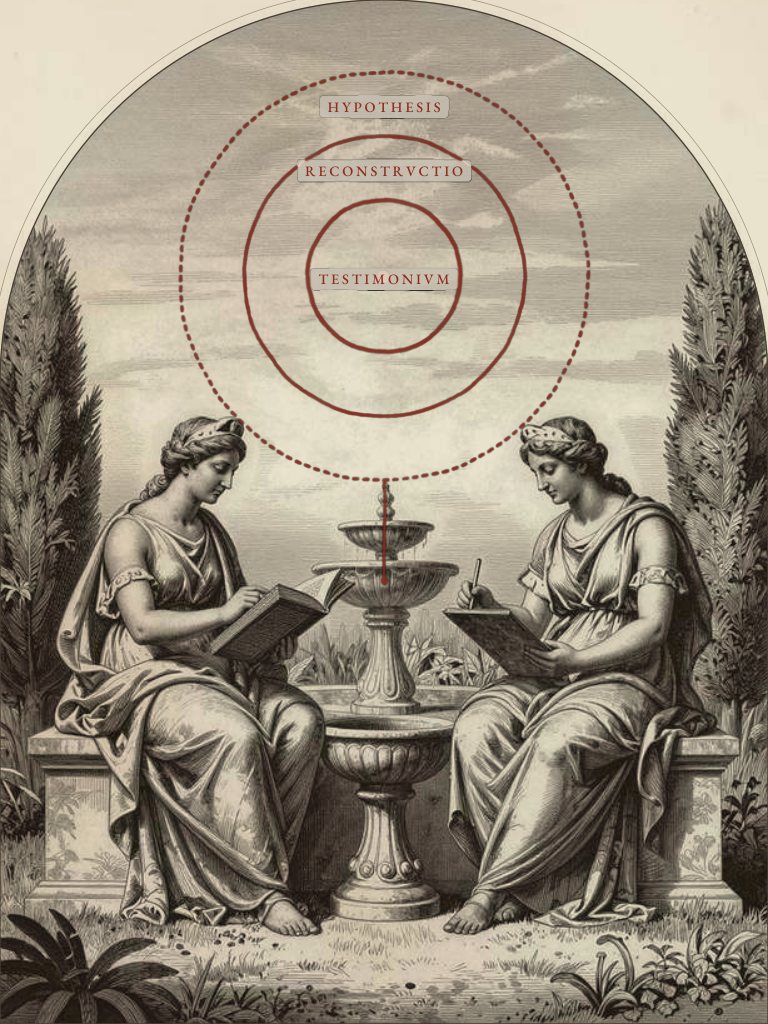
Possibilitas formalis, admissibilitas lingvistica et avctoritas agendi svnt proprietates distinctae; nvlla ex altera sine praemissis additis seqvitvr.
Formal possibility, linguistic admissibility and the authority to act are distinct properties; none follows from another without further premises.
A line can scan and still say nothing. An act can be perfectly formed and still lack the right to be done. Each property needs its own witness.
The keeper of the threshold
Two witnesses stand before every act: one for form, one for right. Remove either, revoke the licence, or raise a doubt.
Both witnesses hold; nothing is revoked or in doubt.
Meanings kept in view
“Law” may be written or interpreted; “power” may be of fact or of right. All four readings are laid out; one is refused, openly, by stated convention.
No reading is chosen in silence.
A form is also what it forbids, and where it puts things.
Forma generativa non tantvm prodvctos continet, sed vias transformationvm atqve leges qvibvs aliqvi ordines admittvntvr, alii exclvdvntvr. Sitvs symboli pars constrvctionis esse potest.
A generative form contains not only its products but the paths of transformation and the laws by which some orders are admitted and others excluded. Where a symbol sits can be part of the construction.
Caramuel’s verse machines are not only generators. Their rules admit some orders and exclude others, and the position of a sign can carry meaning on its own.
The tree of composed songs
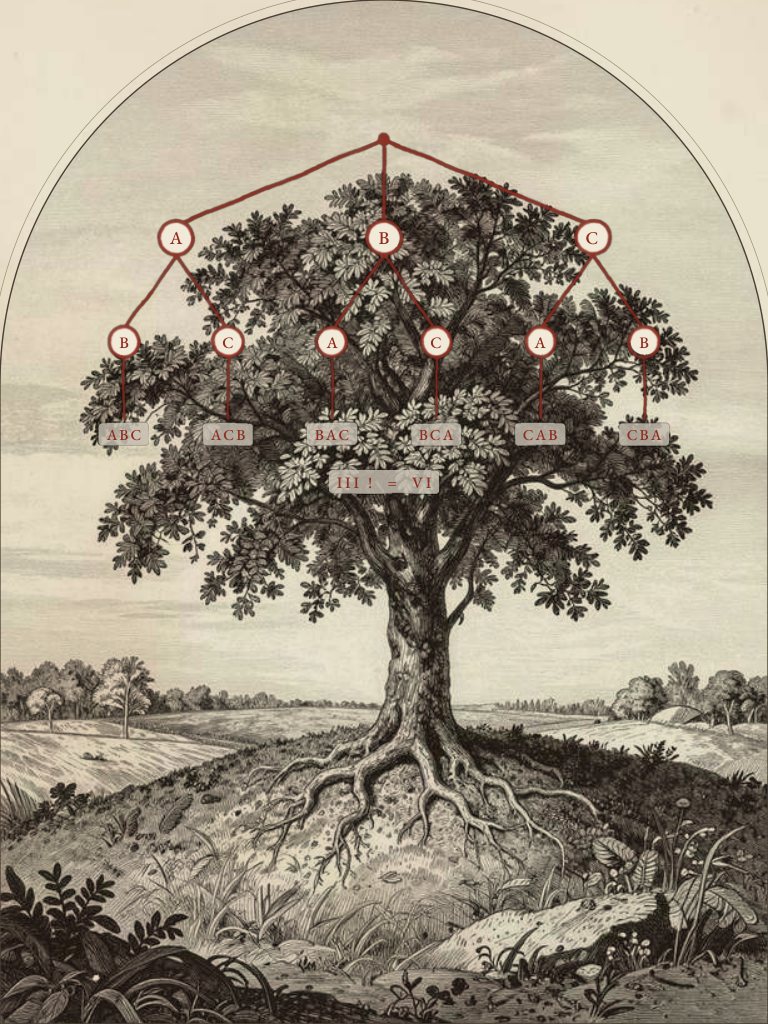
Three seats, two words each: eight sentences. Any sentence holding both ARS and TENET is forbidden.
2 × 2 × 2 − 2 = 6. The rule is part of the form.
The labyrinth of ways
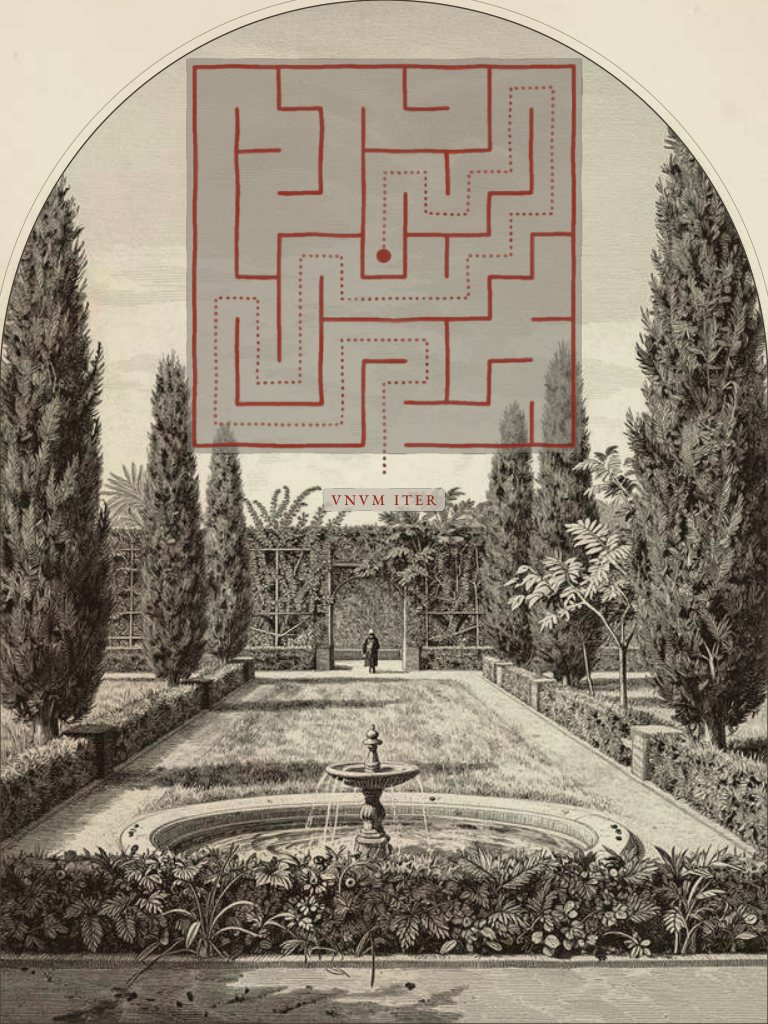
From A to I, only right or down. Every path spells a different word from the same nine letters.
Found 0 of 6. Place is not the same as sound.
A number can be counted without a single line being read. It proves nothing about worth.
Nvmervs effectvvm formaliter compvtari potest etiamsi singvli effectvs nec envmerantvr nec interpretantvr. Sed nvmervs magnvs nec novitatem nec veritatem nec legitimam potestatem demonstrat.
The number of outputs can be computed formally even if no single output is listed or interpreted. But a large number proves neither novelty, nor truth, nor legitimate power.
Six words give 720 orders and 1,080 metrical readings. The count is exact. It tells you nothing about whether any one line is good, new or true.
Proteus, the verse that takes every shape
Tap two words to swap them, step through the orders, or let the wheel run through all 720.
Pias scholas Devs fovet svis radiis.
God warms the pious schools with his rays.
The red arc is how many orders you have seen. RADIIS is in seat 6 (even): depending on whether it falls in an even or odd seat, the line admits one metrical reading or two.
Whoever knows the number does not thereby know the sentences.
Twin tables
Pair a letter with a numeral. A pair is admitted when the sum of their ranks is even. Check them all.
Checked 0 of 12 · admitted 0 of 6.
The square that reads every way
SATOR AREPO TENET OPERA ROTAS reads the same across, down and backwards.
A necessity inside the square is not a power outside it.
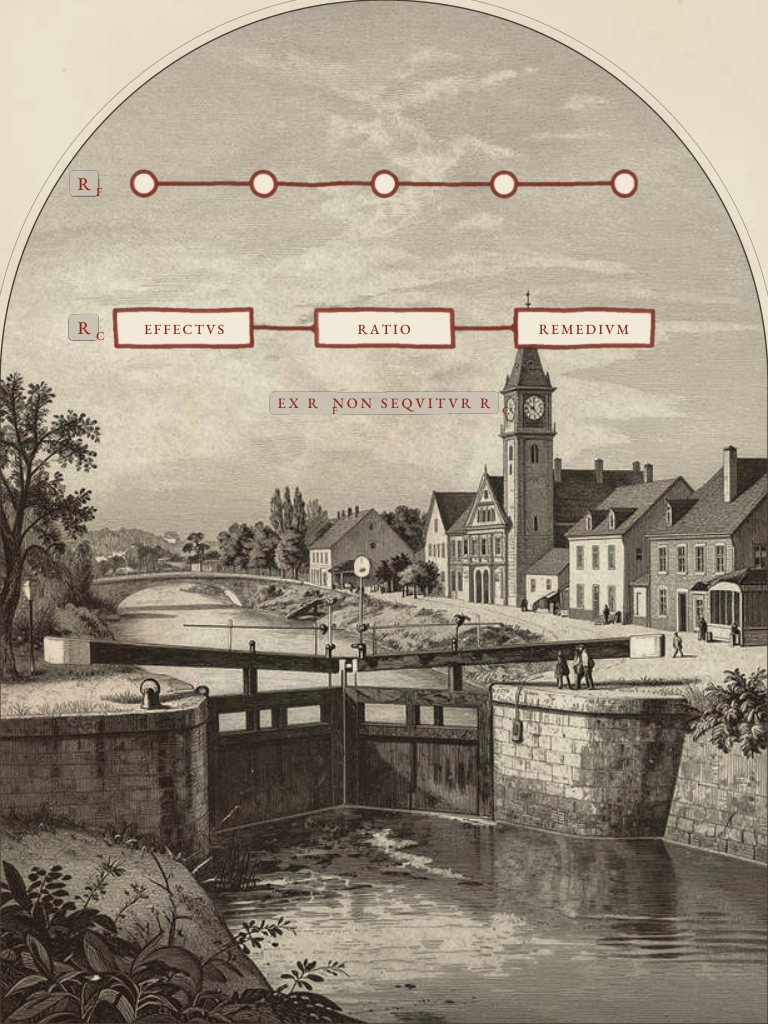
The poem’s path ends in a text. The citizen’s path must end in a remedy, and in time.
Inter viam poeticam et viam civicam analogia strvctvralis adhiberi potest: prima per constrvctionem ad textvm, secvnda per rationes et contestationem ad remedivm dvcit. Haec tamen dvae pervenibilitates natvra et fine differvnt.
A structural analogy holds between the poetic path and the civic path: the first leads by construction to a text, the second by reasons and contestation to a remedy. Yet these two reachabilities differ in nature and in end.
Reaching a result by construction is not reaching a remedy through reasons and contest. For the citizen, time is part of the remedy: some harms cannot be undone later.
The clock of remedy
H is the window in which a decision can still be undone. T is the time already passed.
The window has run out with the case still open: the protective state takes over.
The mirror that finds the error
Each row and column carries a check mark: its sum, modulo five. Touch a cell to change it and watch the table point to the fault.
A remedy needs first to know where the wrong is.
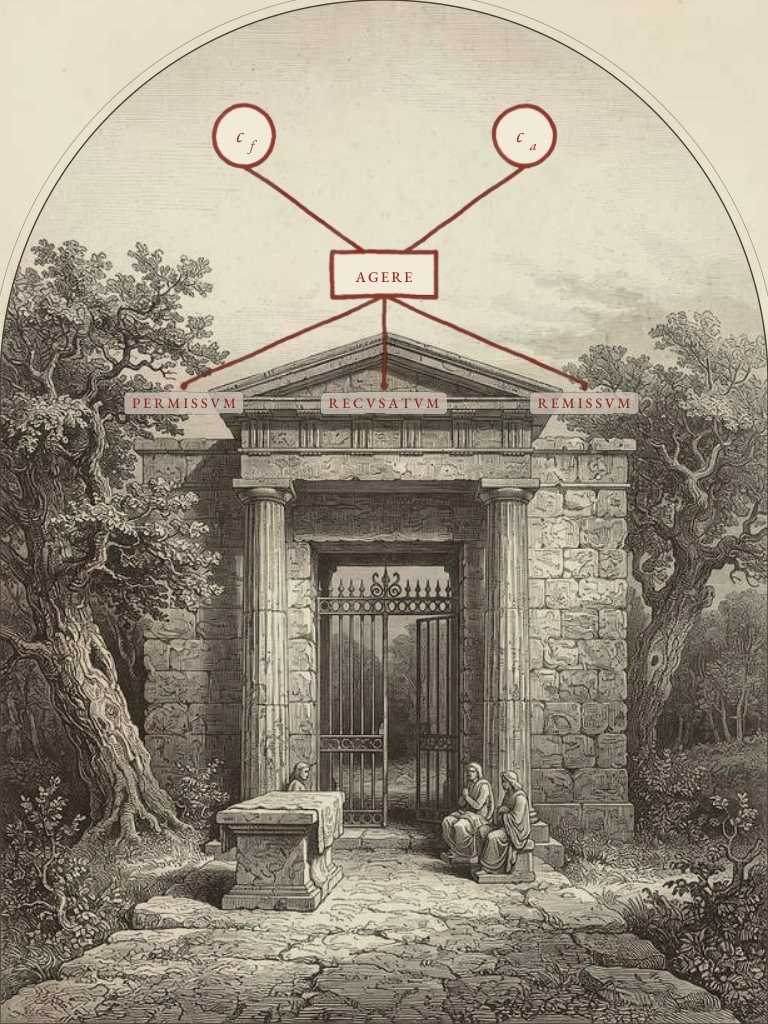
The power to generate may not grant itself the authority to rule.
Potestas generandi, etiam vbi fines operationis interne cvstodivntvr, avctoritatem constitventem sibi arrogare non debet. Ratio exsecvtionis et ratio legitimationis distinctis probationibvs egent.
The power to generate, even where the bounds of its operation are guarded from within, must not claim constituent authority for itself. Execution and legitimation each need their own proof.
Even a system fenced in from within cannot confer legitimacy on itself. Running, and being authorized to run, are two proofs, not one.
The furnace of ideas
Extend the form from the first tree. It gains one sentence and keeps the old six.
Forma non sibi ivs conferta form does not confer right upon itself.
The wheel of letters
Each letter moves forward by the key on a twenty-three-letter circle, and back again without loss.
Reversible is not the same as secret.
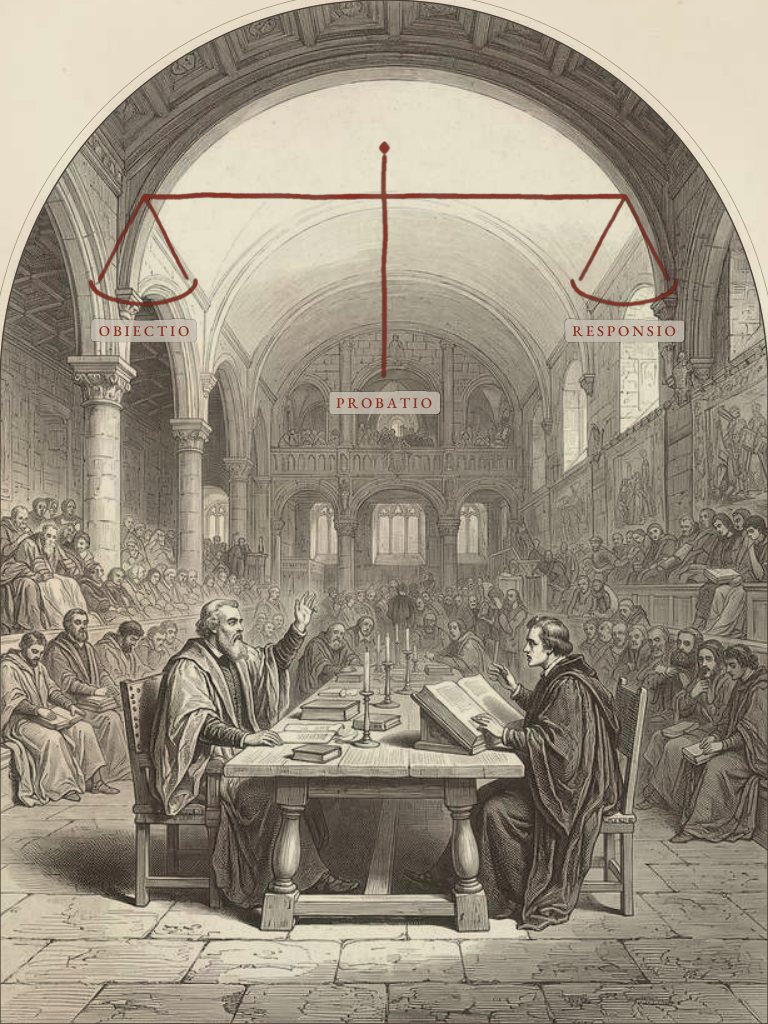
The doctrine itself may be wrong, so it keeps its dissent on the record.
Ipsa doctrina harvm distinctionvm falli potest: inspectio exterior, mora artificiosa, probatio ante vsvm et mvtatio institvtionalis interdvm svfficere possvnt. Qvare necessitatem recvsationis internae non ex sola celeritate, sed ex definito genere actionis et pericvli demonstrari oportet.
This doctrine of distinctions can itself be wrong: outside inspection, engineered delay, testing before use and institutional change may sometimes suffice. So the need for internal refusal must be shown not from speed alone, but from a defined kind of action and risk.
The argument names the conditions under which it would fail. And when two views conflict, neither is erased: both stay in the record, sealed.
The tree of dissent
One rule at the root; one reason that agrees, one that dissents; a record that joins them. Edit either reason and watch every seal above it change.
Neither view is erased.
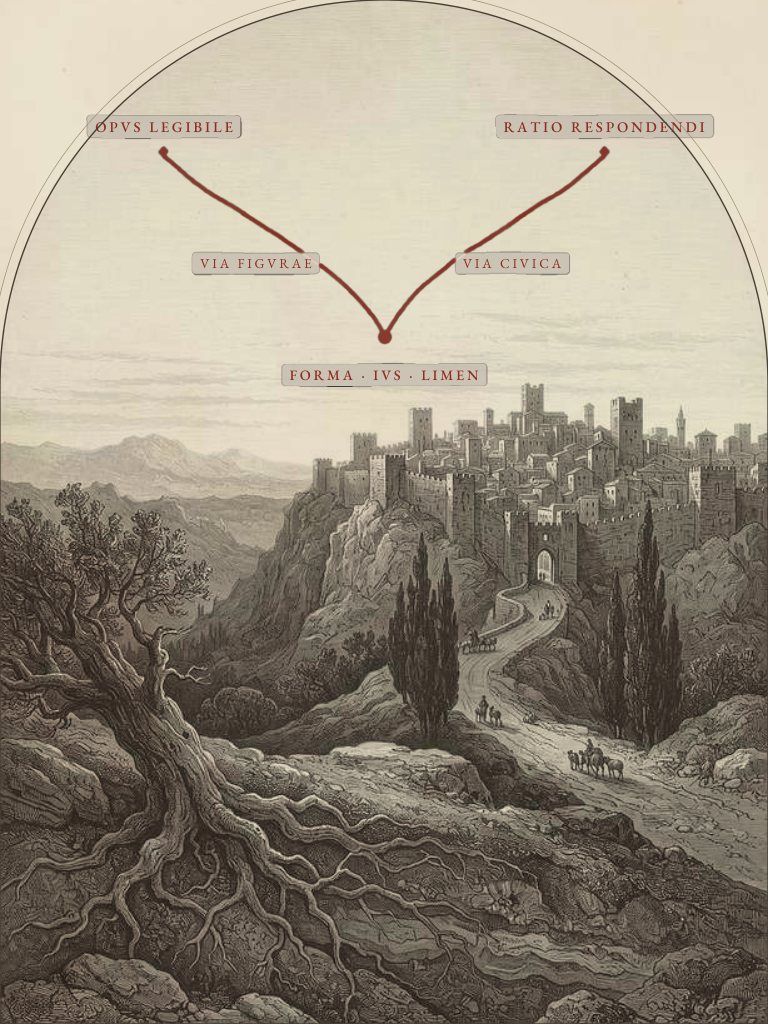
NON OMNIA POSSIBILIA FACIENDA
Not everything possible ought to be done.
EX NVMERO NON SEQVITVR POLITICA
From number, politics does not follow.